Reviews of: Final Fantasy Adventure (Seiken Densetsu), Tetris Attack (Yoshi no Panepon), Castlevania 2: Belmont’s Revenge (Dracula Densetsu II), Parasol Stars, Masakari Densetsu Kintarou Action Hen.
My name is Ray Larabie, and I’m talking to you from Nagoya, Japan. Welcome to episode number 48 of Game Boy Crammer. Today I’ll be reviewing Final Fantasy Adventure, or Seiken Densetsu. Tetris Attack (Yoshi no Panepon). Castlevania II Belmont’s Revenge, Dracula Densetsu II.
Parasol Stars, and Maseraki Densetsu, Kintaro Action Hen. Let’s start the show. Final Fantasy Adventure by Squaresoft. In Japan it was called Seiken Densetsu, Final Fantasy Gaiden, and it was released in June of 1991. In the US, Final Fantasy Adventure, November 1991. In Europe, Mystic Quest, sometime in 1993.
Like all of the other Game Boy Final Fantasy games, it was re-released by Sunsoft in 1998. Final Fantasy Adventure is a Zelda-like RPG, but compared to Zelda, it’s more RPG, by which I mean there are more RPG elements in it. Now unlike the other Final Fantasy games on Game Boy, this isn’t just a rebranded version of another game.
If you’ll remember, the Final Fantasy Legend games were based on a series called Saga in Japan. In Japan, this one was actually marketed as a Final Fantasy spin-off series, and this series eventually led into the Mana series. So after this, you’d have the Secret of Mana on Super Nintendo, and that was called Seiken Densetsu II, so there’s a direct lineage from that in Japan.
Whereas on the Super Nintendo, Secret of Mana was never really marketed as a sequel to Final Fantasy Adventure. Then there was Seiken Densetsu III on Super Famicom, Legend of Mana on PlayStation, Sword of Mana on Game Boy Advance, Children of Mana on DS, and there was PlayStation 2 games, and now there’s Circle of Mana on iOS and Android.
The whole concept of the Mana world is the Tree of Life. This is a recurring theme in lots of stories, including Avatar, but also a lot of religions that weren’t even connected. It’s just kind of a common idea that heavens and the earth are connected by some ancient, all-knowing tree. In this story, evil has polluted the Mana of the tree or something like that, and you gotta fix it.
I mentioned Sword of Mana on the Game Boy Advance. Sword of Mana isn’t really a sequel as much as a remake of this game. If you’ve already played Sword of Mana, you’re gonna find this thing very familiar. Much like Zelda, everything happens in the overworld. You are going to be chopping monsters with your sword or other weapons using the A button.
The B button will use items. So you go into the menu, you pick the item you want to use, that’s gonna be armed with your B button. So let’s say you’re poisoned, you can use the pure item in the menu, and then hit B to activate it. There’s an equip menu, you can equip weapons and armor, just like a normal RPG.
You’re also gonna be able to use magic. This also uses the B button. Now here’s something different. Instead of collecting specific keys to open doors, I mean that does happen, but a lot of the doors you just need to have keys, and you can buy them in the store. Or sometimes pick them up from enemies that drop chests.
A lot of times you’ll find a needed item that you’re out of will just magically appear. Kind of like in Zelda, when you need hearts, the hearts start appearing, or you know, it’s helpful that way. As you walk around and go through the story, there will be some NPCs, some friends that’ll help you and travel with you.
Now they’re generally kind of dumb. Some of them don’t fight, some of them do fight, but they kind of just shoot the wrong direction and go the wrong place. But don’t worry about it. What’s important about these people is they can help you. If you go to the menu and go to ask, sometimes you’ll get help, sometimes you’ll just get advice.
It depends who you ask. Right at the beginning of the game, the first person you meet, try ask and she’ll heal you. You can ask as much as you want. So right at the beginning of the game, you’re not really in danger of dying. Like in any RPG, you’ve got towns with ends and weapons, stores and potions.
All that kind of stuff is there. Something that’s similar to Zelda but different is there are breakable walls. But unlike Zelda, you don’t see a crack in the wall. It just looks like a regular wall. You have to hit it with your weapon. And if you hear a clanking sound, that means that wall could be destroyed.
That might sound like a recipe for walk along every wall and hit it with your sword. But if you look at your map, when you’re in a dungeon and you look at your map, you press select to do that. Sometimes you will have a hint, oh, there’s a room I can’t get to. Maybe there’s a wall I can break down to get to it.
Now I mentioned magic. There are only eight magic abilities you can have in this game. And there are only a few different weapon types and not too many variations of those. So even though it has the Final Fantasy name, there’s not an encyclopedia’s worth of objects you need to know. The way you level up in this game is really interesting.
You get to choose what aspects you want to level up. After fighting some enemies, it’ll inform you that you’re going to level up. It’ll actually replenish your health to full, which is great, especially when you’re running out of health and you think you’re getting close. Just beat up a bunch of monsters and you’ll get instantly healed.
You can use your level up towards power. This will make you more powerful at, you know, sword play or whatever weapon you’re using. Stamina builds up your defense. You’ll take less damage and you’ll get extra health, like your health bar will be larger, your HP. Wisdom increases your wisdom. What does that mean?
Well, magic. It makes your magic better. It gives you more MP. Will, well, you know when Zelda, when your sword is at full, it’ll start shooting stuff? Well, in this one, if you let that bar at the bottom of the screen fill up all the way to the top, your weapon will have special abilities. If you level up that will, it’s going to make that bar charge up a lot quicker.
Now, at the beginning of the game, it charges up so slowly, you’ll hardly ever get to use it. If you want to, you can put all your level ups towards will and that bar will charge up really quickly. This alone gives the game a lot of replay value. You can play this game with a lot of magic and will and low power and stamina or whatever you want.
Now, just in case you start forgetting this is Final Fantasy, there’s a chocobo in this game and it’s very important because you’re going to get to a part of the game where things will moogle you. You’ll turn into a moog. It’s a status. Your appearance will change and basically you’re helpless. Everything is going to attack you and do a lot of damage.
There’s an item that’ll prevent you from getting moogled, but after you’ve been moogled, it’s too late. You can wait a long time and it’ll go away. So find a safe place. You can kind of go between screens and bop back and forth or sometimes you’ll find your doorway. There’s a spot where they won’t catch you.
Or if you’ve got a chocobo, why don’t you ask them to fix it for you? The levels don’t open up like they do in Zelda, where you gain different abilities to open up different parts of the world. It’s more of the storyline that’s moving everything ahead. You’ll find that certain weapons will affect certain types of obstacles, like plants, for example, or trees, and certain enemies will be immune to certain weapons.
You’ll have to experiment to see what works. Like all the other Final Fantasy games on Game Boy, you can save anywhere, but if you want to load, you have to restart the game. The music in this game is quite good, especially for 1991. The graphics are top notch. They’re at least as good as Zelda, if not better.
The difficulty is just right. If you’re the kind of person that just blows through Zelda games, you might find it too easy, but for normal people, it’s just fine. The only frustrating part for me is I found the maps a little confusing, but there’s a map in the manual. If you don’t have that, you can find one easily online.
If you’ve got a map, it’s really unlikely you’ll get stuck in this game. Of course, this is an old game. You’re going to have to replace the battery. The Japanese version is the same. There are some translation differences and some of the graphics are a little different. There’s a pentagram symbol they changed, but it’s not that much different.
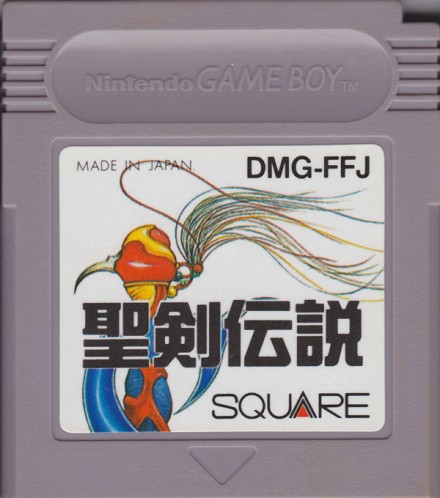
Final Fantasy Adventure is a must-have game for the Game Boy. It always makes everyone’s top 10 list. You can play it over and over again. If you don’t have it, get it right now. The Japanese version, Seiken Densetsu, Final Fantasy Gaiden, is DMG-FFJ. Final Fantasy Adventure in the US, DMG-FF. Mystic Quest is also DMG-FF-EUR.
And the reprint, the Sunsoft version of Final Fantasy Adventure, which is exactly the same, DMG-FF. Tetris Attack, developed by Intelligent Systems, was released in August 1996 in the US, around the same time in Europe, and in October of 1996 in Japan. In Japan, it was called Yoshi no Penepon, or Yoshi’s Penal Depon.
It’s also on the virtual console for 3DS in Japan. Tetris Attack started as a Super Famicom game in Japan called Penal Depon. It’s a block puzzle game. Blocks fall from the top. You can swap blocks. So if there are two blocks, you can swap them. The right becomes the left, the left becomes the right.
You use this technique to match three or more blocks. They disappear. If the screen fills up to the top, it’s game over. In the Super Famicom version, Penepon had its own set of characters, anime characters. When it was localized for Super Nintendo, they used Nintendo characters like Yoshi, Shy Guy, etc.
So when they did the Game Boy version, instead of having two different sets of characters, they decided, let’s go with the Yoshi thing. So even though it’s called Tetris Attack on the Game Boy, it’s exactly the same as the Japanese version. I got into this game on the DS. It was called Planet Puzzle League.
The European version was Puzzle League DS. In Japan, Panel de Pon DS. There was a Game Boy Advance version called Dr. Mario and Panel de Pon. In English, that was Dr. Mario and Puzzle League. It was on the Nintendo 64. Let’s get back to the Game Boy version. You don’t have colors to help you match tiles in this game, but luckily, the design of the tiles is very easy to identify.
You’ve got hearts, stars, diamonds, and circles, and triangles. But they vary in tone quite a bit, so you’re not going to get confused. There’s an endless mode, puzzle mode, and a story mode. With the story mode, you’re just going to be introduced to different enemy characters. You’re just going through levels, and you can save your game with a password.
As I say every time with these types of games, when things are slow, you need to develop a strategy that’s going to work when things get so fast that you can no longer think. My strategy is, pick two arbitrary shapes. For me, it’s hearts and stars. Stars go on the left, hearts go on the right. As soon as you see the blocks, put all the heart ones on the right.
Put all the star ones on the left. Try to dig pieces that are not hearts or stars out from under them. What you end up with is kind of a mass in the middle of simplified blocks. There are only three other types. If you concentrate on moving the hearts to the right and the stars to the left, you end up with these big multiple chain reactions that happen in the middle without you even trying.
It’s just a probability thing. If you have a simpler set of blocks, you’re more likely to have chain reactions. I’m not saying completely disregard what’s going on in the middle. That’s my strategy anyway. The graphics in this game are perfect. For the size of the Game Boy screen, they really maximize the use of the screen.
There’s not that much I can say about this game because it is so simple, but it’s just well done. It’s a shame they use the word Tetris in the name because it has almost nothing to do with Tetrics except blocks are falling. There’s no reason not to get the Japanese version because there’s no text you really need to read to play the game.
The menus are simple enough to figure out. And it’s cheap, cheap, cheap. Yoshi’s Panepawn is one of these games that’s always in the bargain bin. So you shouldn’t have to pay a lot for it. For the US version, DMG-AYLE. European DMG-AYLP. Japanese version, DMG-AYLJ. Castlevania 2 Belmont’s Revenge was released in Japan in July of 1991.
It was called Dracula Densetsu 2 in Japan. In the US and Europe, it was called Castlevania 2 Belmont’s Revenge. In the US, it came out in August 1991, November 92 in Europe. This was made by Konami. I reviewed the first Castlevania in episode number 42 and it was not very good. This game is similar except that it’s actually good.
The character looks about the same. The backgrounds are more detailed but similar. But this time, everything just works. Jumping on platforms feels right. Air control feels right. When you use the whip, you can actually hit what you want to hit. It’s like they took the original game and just fixed it.
Now your main weapon is still just a whip, but now you can pick up an orb and you can get a longer whip. Pick up a second orb, you get a long whip, that shoots fireballs at the end. And a secondary weapon. If you push up and shoot, you will fire a secondary weapon. You can get Holy Water. Holy Water is a short-range arcing weapon that makes a fire on the ground.
If an enemy walks into that fire, it’ll take damage. And it does more damage than whip. This is especially useful for eyeballs. It will melt eyeballs. You don’t want eyeballs exploding on these rickety wooden bridges. And you have an axe slash cross. Now here’s where it differs from the Japanese version.
I played the Konami GB Collection version for Game Boy Color. It’s basically the same game but in color. But the secondary weapon is this cross that moves kind of like a boomerang. It moves horizontally and then you can catch it. But in the American version, it’s an axe that makes an arc. So it doesn’t just look different, it actually has a different function.
I prefer the cross in the Japanese version because you can jump up in the air and use it and you can clear out bats really easily with it. It’ll just keep bouncing back and forth until it takes out all the bats or birds. Just like in the first game, you can select what level you want to start on, but it’s different.
You have four castles to choose from. Instead of just choosing a number, you get a visual map of all four castles. And after you destroy the castle, you’ll see a destroyed version of it. Looks cool. There’s the Crystal Castle, the Plant Castle, the Rock Castle, and the Cloud Castle. If you can defeat all four castles, each one has a boss at the end, you’re gonna go to Castlevania.
Castlevania is a long level. It’s got two bosses and then, finally, you’re gonna fight Dracula at the end. Little Dracula tip, only hit him in the head. And the first boss in the Castlevania level, ooh, it’s tough. It took me a long time to get through it. You have to memorize it, basically. There’s a big snake dragon thing and it just took me a while to get through it.
The difficulty of this game is not that hard. Because you’re not fighting against the game itself, like you were in the first game. I found I almost never fell to my death off platforms. They’re easy enough to jump on. You get disappearing blocks, but you get a warning before they disappear. You’ll see their little ice blocks and they’ll start, they’ll make a little cracking sound, so you know it’s time to jump off it.
They don’t just disappear with no warning. Now when you’re sliding down ropes, you have an option of sliding down quickly. Right around the middle of the Crystal Castle level, you’ll see part where it seems like it’s impossible to slide down because there’s a spiky wall coming at you. Now you have the ability to slide quickly.
I don’t think there are any more enemies than there were in the first game. The bosses are more varied, for sure. As far as the enemies you’re gonna see, you’re gonna see big bats, little bats, ravens, skeletons. Now they’re not walking around like some other Castlevania games. They’re just on the ropes and they throw bones at you.
You got the eyeballs from the first game, but they look better. The mud man and these trilobite rock monster things that only come out in the dark. It’s weird. Oh, and this thing that just throws swords at you like crazy. Oh, they’re really hard. I still don’t know a strategy for these guys who can just try to survive.
And these guys that throw boomerangs, the boomerang comes back at a different level. So if you jump over the boomerang and it’s coming back, it might be coming back at a different level than it was thrown at. It takes a little practice to not get hit by those things. The music in this game is wonderful.
There’s just something about Konami games. Not all Konami games, but this is one of the good ones. There’s a different theme for each castle and the Castlevania part. And there’s a password save. If you die, you get a password so you can chip away at those castles and then deal with the Castlevania level at the end.
So finally on the Game Boy, a good Castlevania game. Even if you’re not into Castlevania and you just like a good platform game, this is a good platform game. There’s no reason not to get the Japanese version, but be careful. If you’re going to buy the Konami GB Collection to get the color version of this, make sure you get GB Collection Volume 4, the one that was released in Europe.
In Japan, it was released on GB Collection Volume 3. Keep in mind, there is a Game Boy and a Game Boy Color version of Konami GB Collection Volume 3. So if you’re looking for the color version of this game, make sure it’s the Game Boy Color version. For the Japanese version, Dracula Densetsu 2, DMG-CWJ.
For the US or European version, Castlevania 2, Belmont’s Revenge, DMG-CW. Parasol Stars Rainbow Islands 2, developed by Taito. Published by Ocean, was released in Europe only in 1991. Parasol Stars is part of the Bubble Bobble series. You had Bubble Bobble at first, Rainbow Islands, and now this. This is supposed to be a sequel to Rainbow Islands, but on the box, it says Parasol Stars Rainbow Islands 2.
When you start the game, it says Parasol Stars, the story of Bubble Bobble 3. But don’t worry about that too much, because the whole Bubble Bobble series is confusing like that. There’s Bubble Bobble 2, Bubble Bobble Part 2. It’s all over the place. Whereas Rainbow Islands kind of went away from Bubble Bobble a little bit, it was quite a bit more complicated.
Parasol Stars goes back to making it a little bit more like Bubble Bobble. It’s a single-screen platform game. It came out first on the PC Engine and TurboGrafx-16. Instead of playing a dragon like you did in the first game, you’re going to be playing a human form of that same character. Instead of blowing bubbles, you have an umbrella.
This umbrella can be used as a shield, so you can push left or right and use the A button and use it as a shield. You can hold the umbrella up. You can also hold that umbrella in the air and try to catch raindrops, and then you can shoot them left or right. If you catch five raindrops, the raindrop turns into a bigger raindrop, which can have a different kind of elemental power, electricity, fire, water.
There are power-ups that let you access that kind of thing. For example, you’ll see a fire power-up once in a while. You grab that, and then when you collect five raindrops on your umbrella, you can create a fire on the ground, similar to the fire in Bubble Bobble. If you play the TurboGrafx version of this game, you can see how it directly relates to Bubble Bobble.
The enemies are the same enemies as Bubble Bobble. A lot of the times, the power-ups look the same. The prizes look the same. It really does look like a sequel. But when you look at the Game Boy version of it, or even the NES version, it’s hard to see the similarity. In the Game Boy version, a lot of the enemies have been changed, so they don’t really resemble Bubble Bobble anymore.
So every few stages, you get a boss. On these boss stages, there’s no water falling that you can catch in your umbrella. Instead, you’ll have a bottle you can grab. When you grab that bottle, hold your umbrella upward, and you’ll just automatically start accumulating bubbles on top of your umbrella. And you can use that to defeat the boss.
All over these levels are enemies that you can use against other enemies. For example, some of the smaller enemies, if you can take them out with your umbrella in front of you, you can pick them up with your umbrella and hold them, and then you can jump around the board as much as you want, and use that against another enemy.
This is very important to defeat the larger enemies in the level. Now, on the second level, you’ll see there’s a piano, and it takes a lot more hits than a regular enemy, and you can’t just go up and hit it with your umbrella. You have to throw raindrops at it or throw other enemies at it to destroy it.
This gameplay element goes through the whole game. There’s always these big, heavy enemies to kill, and lighter, easy-to-kill enemies. And just like Bubble Bobble, if you take too long to finish the level, an invincible enemy will come out. Not the skull ghost this time, it’s a little burning head. It’s gonna come out and eventually take your life, so you gotta finish the level quickly.
There’s no save with this game, and you have four credits to continue. One-ups look like a heart, so if you see a big heart, grab it. Unlike the TurboGrafx version, the prizes are really small, and it’s hard to tell what they are. So you remember Bubble Bobble on the Game Boy? It had these really distinct prizes.
You could see it was a cake or a popsicle or something, and this one, they’re just tiny prizes. Keep collecting points, because you can earn extra lives with those. So that probably sounds pretty fun, but here’s the problem. The TurboGrafx 16 version was tuned to be fun. If you wanted to catch raindrops on your umbrella, raindrops were just pouring down.
It just took a few seconds to catch the raindrops. In the NES version, there were less raindrops, so it took a lot longer to capture enough raindrops to be able to make use of them. In this one, raindrops are really rare. There are some levels where I just try to catch five raindrops on my umbrella right off the start of the level.
Raindrops are coming down one, two, three, four, five, and then I get the hurry-up notice, and that thing comes out and kills me. In the original version of Parasol Stars, if you had a bubble on top of your umbrella, it didn’t make you completely invincible, but you could use it against enemies. If there was an enemy above you and you had a bubble on your umbrella, you could jump upwards.
In this one, anything comes close to you, you’re dead. Everything kills you really easily. If you play the NES version or the TurboGrafx version, it’s like night and day. There are certain tricks you can do to finish a level that you can’t do in the Game Boy version because of time constraints, because the speed of your character is so much slower.
When you’re falling, you can slow your fall by using your umbrella. When you fall through the bottom of the screen, you’ll come out the top, but there’s kind of a limbo where you can’t see where you are. This was true in Bubble Bobble. If you fell through the bottom of the screen, it was a short time and you couldn’t see where you were, then you’d appear.
In the other versions of this game, that still happened, but in this one, it takes ages. You can just be up there for several seconds, not knowing really where you are, and the time runs out so quickly. You fall at such a slow speed that it’s really… When you go through the bottom of the screen, you’re probably gonna die because you don’t know where you’re gonna come out, and it eats up so much of your precious time that, except for the very first few levels, that hurry-up thing comes out so quickly.
I really like Parasol Stars on other systems. Maybe I’d like this one more if I hadn’t played those, but this one is just so badly tuned. There’s no need for making it that much more frustrating, like to die just by going near anything. I don’t know how many levels there are in this version because I couldn’t get that far into it.
I got to the casino level. On the TurboGrafx, I’m used to finishing that level in a couple of seconds. You go down the middle, you take out the slot machines, the whole screen fills with stars, and you just collect all the stars. In this one, I couldn’t do it. I actually had all my credits saved to that point in the game.
I just used them up just trying to finish that level. It takes so long just to capture five raindrops, just to survive that part. And then, you have to throw that fire right in the middle, but even if you throw it in the middle, it doesn’t kill both guys. It can kill one or the other. Oh, if you get to that level, you’ll see exactly what I mean.
I only recommend this game if you intend just to play the first few levels, or you’re completely masochistic. Although this is only available in Europe, it’s actually not that expensive. I checked on eBay. They go for under 20 bucks in the box. Parasol Stars with DMG-P6. Masakari Densetsu Kintaro Action Hand was released in Japan only in August of 1992.
This game was developed by Tose, published by Tonkin House. Tose made Maru’s Mission, also known as Boira Jajamaru Sekai Daibouken. They made Ultraman Club, Roadster, Tower of Druaga, Kid Icarus, Yoshi’s Cookie, Game Boy Gallery, Crayon Shin-Chan, all kinds of Game Boy games. So Masakari Densetsu Kintaro…
Let’s just call it Kintaro. Kintaro is an action platformer. You play Kintaro, the hero of Japanese folklore. Kintaro is often translated as Golden Boy, not just by us foreigners. They translate it that way in Japan, too. He was around in the Heian Period, referred to the review of Heian-kyo Alien for information about the Heian Period.
He was born from a lovely mountain hag on Mount Ishigata, and he has superhuman abilities. But there are different versions of the origin story. Key points about Kintaro. He has an axe called a Masakari. That’s why the title of the game. And he gets along with animals really well. He fights monsters and demons.
Now, in this game, it’s not exactly the Kintaro story told. It’s a mix of lots of different Japanese folk tales. If you’re lucky enough to have a Japanese person around, you can say, hey, why is this monkey throwing persimmons at a crab? And they’ll explain it to you, and you can look it up. To get through this game, it’s not completely necessary to follow the storyline.
It starts off like a typical platformer. You walk from the left to the right. Everything scrolls. You can jump, and you can punch. At first, you’re going to be punching little demons, little oni, I guess. And you’ll meet a few animals that don’t look quite like enemies. Well, when you go up to them, you’re going to get a little bit of storyline.
Usually, the storyline is, let Sumo wrestle for no reason. Now, don’t forget, Kintaro has superhuman strength, but he still is evenly matched with a bunny or a bear or all kinds of creatures. The Sumo game is the minigame that’s used throughout the entire game. There’s not a whole bunch of different types of minigames.
This is it. To win at Sumo, push the D-pad towards your opponent. Hit the A button really, really fast. If you can do a two-finger tap on the A button and just do a drum solo on that, you will not have a problem winning any Sumo match. There’s no strategy to it. Just press the button fast. Soon, you’ll be offered an opportunity to wield an axe.
You’re a masakati. And the goddess will ask you, hey, what kind of axe do you want? Do you want a golden axe? Do you want a silver axe or a copper axe? Of course, you’re going to pick the gold one. It’s the first one on the list. The other choices don’t work. And now you don’t have an axe. So hit select.
On the select screen, you will see a choice of four different things. Now, that’s different amounts of honey you’re going to give to your bear, but let’s get to that later. Below that, you have three choices. The first one is hand-to-hand combat, so that’s your punch. Second one is Mackie. That’s rolls.
You’re going to pick up these rolls all the time. You know the word Mackie from when you go to sushi. You’re going to see a counter on the screen that shows how many rolls you have. Save him up, because you’ll need him for the second boss. So the bear, a little bit later, you’re going to meet a bear.
Of course, he’s going to want to sumo wrestle you, because everybody in this game wants to sumo wrestle you. Once you have a bear following you around, you can give him honey, and he’ll do different stuff. Depending how much honey you give the bear, it’ll have different effects. For example, a shield, a bear that flies above you, which isn’t that useful, but sometimes.
A bear that stands in front of you like a shield. A bear that stands in front of you like a shield. Not a human shield, a bear shield. And riding on the back. Riding on the back is very important, because this is what will let you extend your jumps. You’re going to get to some puzzles where even the pixel perfect maximum jump will not get you to the next platform.
That’s where you got to whip out your bear. The bosses are pretty easy to figure out, and there’s not a lot of variety in the bosses. They shoot fireballs or animals at you, and you just have to hit them a bunch of times. Now your axe is very powerful compared to those Mackie rolls. So sometimes if your health is high enough, just go and axe your boss in the face a few times.
Can you get extra lives? Do I remember how you get extra lives? No. But when you run out of lives, you can continue. There’s also a password save. The passwords are all in hiragana, so you’re going to have to be writing down hiragana. A little bit later, you’ll find these pegs on the wall. Not on the wall, just kind of in the air in the background of the level.
Jump at them and use your axe. Your axe will hook into them, and then you can swing. If you time it right and jump, you can use your axe on another peg, and then swing from peg to peg that way. It’s very easy to miss. You’ll find in later levels where you have to use these a lot, you’re going to be doing a lot of falling.
Luckily, falling doesn’t hurt, but you can fall into a pit of death. There’s not a lot of leap of faith stuff. There’s one right near the beginning of the level you can drop down, and there’s sort of a challenge. You can axe through some blocks, and there’s a little challenge down there. But it doesn’t happen much in this game.
Don’t waste your time throwing yourself to your death, checking for hidden stuff. Now, there are at least 10 levels in this game, but I got stuck on level 10. There’s a few parts of this game where there’s a hidden puzzle that’s not really consistent with the rest of the game that you have to figure out, and I couldn’t figure out how there’s a floor I have to jump through, like someone’s deck, for lack of a better term.
Couldn’t figure it out. A couple levels before that, there’s a level where there’s these smiling statues, and it’s a really tall level. You’re going to be climbing, climbing, and swinging on those axe things, and going all the way up. You get to the end, and there’s nothing. If you get to that, just drop down a bit.
You’re going to see three statues. Try pushing them, one of the moves. You can get out the door that way. The difficulty of this game is okay. It’s hard, but not really frustrating. But what’s disappointing about it is the boss battles and the constant sumo wrestling. The sumo wrestling is neither fun nor challenging, and it just seems to happen all the time.
You just walk a little bit, you’re sumo wrestling. Talk to a character, sumo wrestle. It’s needless boring filler. The whole reason for these reviews is to help you decide whether or not you should bother with this game. It’s hard for me to say whether this game is good or bad. I think it’s kind of bad.
If you can read here again, that might be a good introduction to various Japanese folktales. And speaking of folktales, I’ll tell you what’s going on with that crab and the persimmons. Crab goes for a walk, finds a rice ball. Onigiri. Some monkey comes up to her and says, Hey, you want to trade this persimmon seed for your onigiri?
The crab’s like, oh, no, what a crappy deal I got. But plants the seed, turns into an amazing tree. Lots of khaki girls on it. Uh, persimmons. But the crab can’t climb the tree. You get the persimmons, you know how crabs love persimmons. So the monkey’s like, eh, I’ll climb up the tree. I’ll get the fruit for you.
The monkey climbs up the tree, starts chowing down on the fruit. The crab’s like, what the hell are you doing? The monkey takes the unripe persimmons, starts hocking them at the crab. Pang, pang. The impact of these persimmons causes the crab to give birth and then die. May I remind you, this is a children’s story.
So the crab’s children somehow know what happened. I guess someone told them. And they basically want to kill the monkey. But they need some help. They need a chestnut, an usu. That’s those big wooden tub things they use for making mochi. You know where they hit the hammer and the guy’s got to move his hands out of the way?
A bee and a big pile of cow crap. This dream team goes to the monkey’s house, waits for the monkey to get home. The chestnut, who is a roasted chestnut, burns the monkey. The monkey freaks out. Grab the bucket, intending to cool down. There’s a damn bee in there. The bee attacks him. The cow poop trips him up.
And that usu thing falls off the roof and kills the monkey. And the lesson for children in this folktale is, avenge your parents’ death. Anyway, the way it relates to this game is there’s a part where there’s a monkey in a tree beaming a crab with persimmons. You need to help him out. I think you have to probably sumo wrestle him.
I don’t remember. Look, it’s not a masterpiece, but it’s weird enough to look into. Masakari Densetsu Kintaro action hen. Look for DMG-KOJ.