Game Boy Crammer · Episode 13
Super Mario Land, Lucle, Vattle Guice
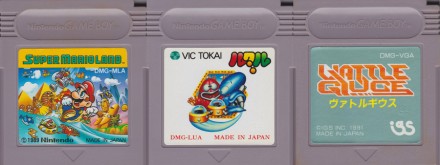
Reviews of Super Mario Land, Lucle, Vattle Guice & how to clean your Game Boy’s buttons.
Welcome to Game Boy Crammer, episode number 13. In this episode, I'll be reviewing Super Mario Land, Lukell, Vattel Guice, and I got a little section on how to clean your Game Boy's buttons. Now, there's not a lot of mention out there about Game Boy Crammer.
It doesn't really show up anywhere. So, if you could mention it on a blog, maybe a gaming forum, that would really help get more people to discover this show. And also, if you can spare the time, I could really use your review on iTunes. There's not a lot of reviews there. I think there's only one. It just doesn't show up on the list when people search for retro games.
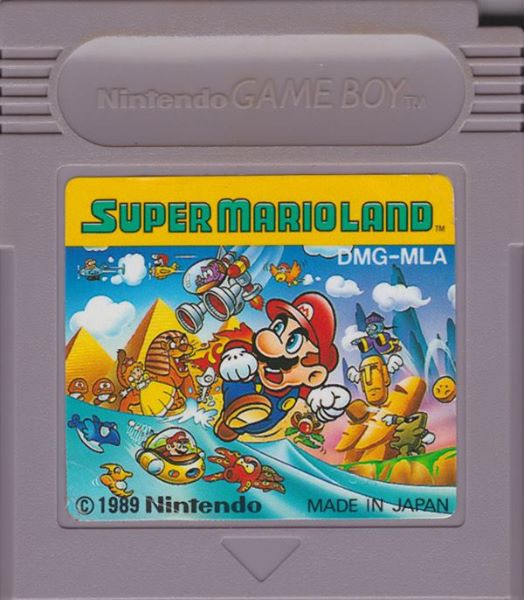
So, in fact, a lot of shows that aren't even running anymore show up higher on the list than this thing. So, if you can take the time and do that, that would really help. On with the show! Super Mario Land! This game came out in the U.S. in the summer of 89, Japan in the spring of 89, and Europe in the fall of 1990.
This was a launch title for the Game Boy. So, if you went to a store and they had one on display, you'd probably be playing this or Tetris. I'm sure almost everyone who bought a Game Boy at launch bought this game along with it. For most people, this was only the third Super Mario game they'd ever seen.
Super Mario 3 had already been out in Japan for a year, but it wouldn't come out in the U.S. until early 1990. And Christmas of that same year, the Wizard movie came out. So, people really had Super Mario fever. The Mario games before that were developed by Shigeru Miyamoto. This one was done by Gunpei Yokoi.
He's the guy behind Donkey Kong, Donkey Kong Jr., original Mario Brothers, and Metroid. The gameplay is very similar to Super Mario Brothers, although there are a few main differences. You're saving Daisy, Princess Daisy. This is her first appearance in a Mario game. The Fire Flower, instead of shooting fireballs, you fire these sort of a bouncing ball.
You can shoot and it bounces off at 45-degree angles. And it also collects coins for you. So, if there's some coins that are kind of hard to get, you can kind of bounce the ball around and try to catch them. You can actually send them down little corridors and stuff like that to collect coins. And you have to be careful with them because you can only fire one at a time.
So, you have to kind of wait. If you miss an enemy, you have to kind of wait for it to finish bouncing around before you can fire again. Another major difference is you have two levels in this game, which are shooter levels. Mario's piloting a plane or a submarine. It's a constantly scrolling screen.
You have to be careful not to get stuck behind something because if it pushes you off the edge of the screen, it's over. Another big difference in this game is it's very short. There's only four worlds with three levels each. And at the end of the level, instead of jumping for the flag, there's a tower and there's a door at the top and a door at the bottom.
You know, you can just walk into the bottom door, no problem. If you get to the top door, you get a little bonus level where you can win extra lives or you can get a fire flower. After every third level, there's a boss to fight. And basically, you just have to get around the other side of them, very similar to the original Super Mario Bros.
The music is not the music you're used to in the original Super Mario Bros. This music was written by Hirokazu Tanaka. He did the music for Duck Hunt. And I really like the music. I love the music where the fish are bouncing. You got this really catchy little tune. I love it. I really like the music in this game and I'm kind of glad it's different music.
The graphics are simplified but very well suited to that screen. You know, a lot of later games were very cluttered and didn't really work well with the blurriness of the original Game Boy screen. You know, if you play this on an emulator, it may look very simple and almost abstract. You have to think, at the time, people were looking at this on a spinach green, blurry little screen.
You know, any extra detail was not welcome. You need to see everything. The controls are okay. It's a little harder to control than the original. I find the run doesn't make you run very much faster than a walk. In a way, that's good because I almost never have to run in this game. If I'm playing original Super Mario Bros., I'm probably holding the run button almost the whole game.
This one, I rarely actually have to hit it. It saves your thumb a little bit. The blocks are a little bit smaller than your character compared to most other Super Mario games, so it adds a little extra challenge. This game is short. They had to make it last a little bit longer. But that being said, it's not that challenging a game compared to a lot of other ones.
Like, it took me a lot longer to get to the end of the original Super Mario Bros. than it did to get the end of Super Mario Land. I find that, you know, once you've played it a few times, you can build up a lot of extra lives. Around the last couple of levels, it gets a little tricky. There's a lot of little timing elements and stuff like that, and some shooter parts that, um, you know, once you've memorized where everything is, it's a little bit easier.
It's not a super long challenge. In fact, you can sit down, if you're not doing a speed run and you're dying a few times and kind of checking out the bonus levels. It'd take you about an hour and a half to get through this game at a casual pace. There's no save game in this, which I think is kind of a problem, because, I mean, this is a portable console.
You have to have some time set aside to play this thing, so there's no pause and save, which maybe is why they didn't include it as a pack-in game, because if you're the kind of person who wants to pick up and play, you know, let's say, on the way to work or something like that, well, Tetris is a better game to play, because you can choose which level you start on and just play it for a little while, you know, you don't have to keep starting at the beginning.
There are a lot of secrets in this game, but I think it's more fun if you find them yourself. There's no secret in this game that I could think of that is like a really difficult one to get through. Not like in Super Mario 3 where you have to fly up with that damn shell, which I never would have guessed.
There's nothing like that in this game. You can just play it through and figure it out yourself. There's a lot of really fun little bonus things all over the place. I find it to be a little bit repetitive in that the bonus levels, I don't know if it was memory restrictions or what, but I find the bonus levels are, there are very few variations of them, and there's a lot of parts of the level where it seems like they copy the same chunk over and over.
Now, once you finish this game, they give you a harder version of the game to start with. After you see the the end screen, you hit any button and you're going to see the start screen. Instead of having a mushroom cursor, it's going to have a little Mario. When you play, there's going to be a lot more enemies, not just more enemies, but there's kind of enemies that don't show up until later levels.
You'll see them earlier on. And I haven't been able to get to the end in hard mode. It is hard. I don't want to go into too much more detail because you probably have this game if you're a Game Boy collector, or it's not exactly hard to come across. But if you haven't played it all the way through, you really should.
I mean, it is a very important game in the series. It led the way to the Six Golden Coins, which was the immediate sequel, and then the Wario series. In a way, I like it better than Six Golden Coins. I find Six Golden Coins to be very difficult. This one's a little bit easier, just kind of a fun, casual experience.
If you have a flash cart or if you're into emulators, it's really easy to find a color mod for this game. So, you know, if you play this on Game Boy Color, it looks kind of... It's okay. You can tell. You can see some of the enemies and stuff like that. In fact, there's a few spots where you can see things that are about to fall on you.
If you want kind of a more original Super Mario Bros. kind of look, it's very easy to find. Look where better ROMs are found. You can find a ROM hack with color characters. If you're looking for this game, look for DMG-ML. There's no reason not to get the Japanese version or the European version or whatever, because they're all the same.
Lukal from Victokai. This is a game that came out in 1994 in Japan and 1995 in Europe and never came out in North America. It's a puzzle game. A little bit hard to explain. It's not like any other game I've ever seen. It takes place on an isometric hexagonal grid, or is it axonometric. And it's just a...
You're on a flat surface and sometimes some of the hexagons come up out of the floor and create obstacles. And you basically have to get to the finish line within a certain time limit. Except this device is not like anything you've ever seen. Imagine you have two suction cups and a bar in between. You can turn on one suction cup and then the other one will rotate around the stuck suction cup.
And then you can switch suction cups. The other one's stuck. And now the other piece is rotating around. So in a way, it's like walking. You can actually keep hitting the A button, which switches feet. And you're switching back and forth between gripping these two cups. So you can kind of walk around with this thing.
Once you try it, you kind of get it. And the B button, all that does is it changes the direction. So let's say you're basically you're hitting A and you're walking. You go A, make your left foot go down, then it starts rotating. And your right foot goes down and it starts rotating. You can keep repeating that motion until you're walking.
The B button will cause it to spin the other way. So if you, let's say you take a step and then you hit the B button, your other foot will go back and then you can kind of step back a little bit. It sounds way more complicated than it is, but it definitely takes a little bit of coordination. When your foot hits an obstacle, it'll bounce back and turn in the other direction.
So a lot of the challenge of this game is going through these really narrow places. You have to kind of wiggle your way through these spaces. You'll find a lot of times you'll end up stumbling backwards because you'll touch the edge that you didn't think you were going to touch. Of course, it reverses your feet motion and then you stumble backwards.
Well, the goal is marked by a checkerboard. On your way to the finish line, you're going to find some power-ups. There's little disks on the ground that will give you some extra time. There's a weather vane that shows you the direction of the goal. It says it'll bring up a little arrow on the screen showing you where the goal is.
There's an S up, which will speed you up. It's very hard to control when it's sped up. If you're in open space, you can kind of tap, tap, tap, tap A, and if you're lucky, you can walk in one direction. But if you're trying to get around obstacles, sometimes it's better to skip the speed-up. And then you have skulls, which kill you.
And really, the point of the game is to get to the target within the time limit. This actually has a battery in it, so you're going to have to change the battery in this character because it's too old. Basically, it saves your progress and it saves your times. To progress, you get a bunch of stages, and then you need to pass those to progress to the next one.
So you're unlocking more stages as you go. Occasionally, you'll come across ice, and you have to kind of use your momentum to skate across it. I think because I'm Canadian, I can't say I'm good at skating, but I'm really good at walking on ice, so I have no problem with those. Then you have these other pieces that come up, which are transparent.
And if you bash against them a few times, you can break them. So a lot of times, you have to break down these barriers. The best way I found to do this is to tap the B button repeatedly while you're touching it. You're tapping against the side, but instead of rotating back, you're telling it to rotate back into it.
So you can just kind of bang, bang, bang, and knock them right out. The first two or three stages are too hard. Then you start having to deal with elevators and cliffs. You can't switch feet while your other foot is in midair. So if you're going along the edge of a cliff and you rotate, and you hit the button when your other foot is out in space, you're going back to the beginning.
Some parts of the game require you to go up on elevators, which is really tough to time and very easy to screw up and end up in midair and falling. I find what's really hard about this game is I'm not quite sure when I'm... Like, I would rather have a 2D version of this game that's straight from above, because then I could tell exactly when my foot is going to touch the surface and when it's not.
There's a lot of situations where, because of the perspective, you can't really tell with precision when to hit the button. And that can be pretty frustrating. I find most of the game is not frustrating. That part is frustrating. It's not a big problem finding the goal, because it doesn't move. So if you grab the weather vane and then run out of time, next time you can skip the weather vane, go straight for the time power-ups, and find the goal.
It doesn't seem like it's a common game. I kind of lucked out getting it for a few bucks, but it seems like... I've seen them for 40 or 50 bucks. It doesn't seem like a common game. You definitely don't have anything like it in your collection. I don't think, I mean, correct me if I'm wrong, I don't think there's ever been another game like it.
One nice thing about this game is, you're allowed to practice the levels as much as you want before you actually try to play through the whole thing to get to the next group. I'm not even sure how many levels are in this game. There's very little information online about this thing. I've yet to get past the third level.
Look for DMG-LU for the European version or DMG-LUA for the Japanese version. Vattel Guice. Vattel Guice, Vattel Guice, Vattel Guice, Vattel Guice. By IGES. This came out in the summer of 1991. It's a Japan-only shoot-'em-up. In Vattel Guice, you fly a spaceship over an alien landscape. While things, uh, the landscape scrolls vertically, aliens come from the top of the screen and you shoot them with lasers.
Sound familiar? Well, this one's completely different because it's got a gimmick. You can hit the B button to drop down to a level, There's the top layer of the screen where you can't actually bump into anything in the landscape, and you can shoot down flying enemies, and then you can drop down to a lower level to shoot turrets.
When you drop down to a lower level, you're susceptible to smashing into buildings. You don't die immediately in this game. When you smash into buildings or get shot with bullets or crash into flying enemies, you lose a little bit of energy. There's a bar on the right side of the screen showing you how much energy you have.
To replenish this energy, because you only have one shot, to replenish this energy, because you only have one life to live in this game, but you can keep replenishing the energy, you need to drop down to the lower level to shoot some of those turrets because they're going to give you power-ups. That's the only way you can get power-ups in this game is from dropping down to the lower level and shooting turrets.
It's really the only reason you'd ever need to drop down there because the turrets are probably best avoided anyway. You got to get dirty, get down on the ground, and get those power-ups. The P power-up will improve your weapon. This game doesn't have a big range of weapon power-ups. You just get like a double shot, and you don't get like the big fire hose like you get in the game like Ryden or something.
Energy, the E power-up, lets you power up your energy, so you'll see the energy go up in your sidebar. The S power-up gives you speed, so you can just move around a little faster, and question mark is a mystery prize. We're not sure what the story is in Vattel Guice. There's a kind of an attractive anime girl that helps you decide what kind of ship you're going to get.
Oh yes, what kind of ship you're going to get. You start off at the beginning of the game with the default ship, which shoots forward. After you defeat the first boss, you will get a choice of three different ships. So you can have the default ship. You can have one that shoots forward and to the sides.
You can have one that shoots forward and to the back corners. Now I'm not sure why you'd want a ship that shoots forward and to the back corners because basically the ship only shoots one shot. Even if you power up the weapon, it's a single shot forward and double shot backwards. In the game where enemies only come from the top of the screen and scroll down, really having shots that go behind you are of no use whatsoever.
And you'll find if you choose that ship, you're going to be stuck in situations where you have to fight a boss and it feels like you have a pea shooter and you'll wish you had chosen a different ship. And the one that shoots to the sides, yeah, it's kind of nice sometimes. It does help with some of the bosses and it's not terrible.
Come on once in a while to try it. Stick with the main ship you start with. Now these levels kind of repeat. Like it's the same kind of loop that goes over and over. And I guess to add variety, right near the end of it, it starts going really fast. So you start speeding up to the point where you can't really shoot the ground targets anymore without getting killed.
Like you can kind of drop down and pick them off really quick. You know, it gets too risky. One thing I don't like about this game is the power-ups. You know, a lot of games, the power-ups kind of bounce around on the screen. These ones kind of float up to the top of the screen where they're really hard to get.
I mean, you're taking a risk going up to the top of the screen, right on the top edge to grab it, but they'll float right off the screen. So you have to grab those power-ups really quickly. The first boss is a large block with a whole bunch of turrets on it. Moves from side to side and up and down a little bit.
And you shoot it and then it has the most underwhelming video game explosion I've seen in a long time. The ship flashes a couple of times and then it seems to be... It's almost like a chef is sprinkling pepper onto it. There's just little black pepper dots that appear on it for a second and then it vanishes.
You defeated the boss. Very, very, very little effort put into the boss explosion. So that's your payoff and that's going to happen a few times during the game until you get to the end of the game. It's a pretty short run. I forgot to count the levels because I was kind of bored, honestly. It does get a bit boring.
It's not super, super challenging. If you're good at dodging bullets, you can get past most of these bosses no problem. And there's no strategy to the bosses except for just shoot them. And really, that's all there is to this game. It's just kind of a mediocre, poorly thought out, top-down shooter. There's no save game, but you can continue after you die.
Um, so there's no battery to replace. There's no Japanese to have to read. No storyline that I could see. I don't know why this thing is called a battle juice. So really, the only reason you'd want to have this game is so you can say, hey, I've got some obscure Japanese video game in my collection. There's really no other reason to get this thing.
You're not going to have any fun with it. And if you're good at shooters, you're going to get through this thing really quickly. If you're trying to track this game down, search for DMG-VGA and you'll find it no problem. Hardware! Hard-hard-hard-hardware! Hardware! Your Game Boy is filthy and disgusting.
I'm talking about the buttons. Now, I don't have to tell you how to clean the outside of your Game Boy. I think you know how to use a cloth and Windex. But as far as the inside goes, well, that's a different story. We got to get inside the Game Boy. This project will work on any type of Game Boy, except you don't want to be going inside a DS because they're like, it's like opening up a laptop.
It's very complicated and you really need to have a teardown guide. But basically, this is a way you can clean your Game Boy. In fact, you can clean your game controllers as well. The best bet is to go online and try to find pictures of someone actually opening up the same model that you have because, you know, there might be some special considerations.
This is, I'll tell you a little bit more about cleaning the Game Boy Color because it's pretty simple. But when in doubt, take a lot of photos. If you got a digital camera sitting right beside you, why not take a picture of what's going on while you're taking it apart? Because if you get stuck and you're not sure where something goes, you can just go back and look at the pictures.
You'll probably never need them, but then you don't have to worry about it. The first thing you're going to need to do is get a Tri-Wing screwdriver. If you don't have one of these things, go online and get one. They're a couple of bucks. It won't cost you more than 10 bucks with shipping to get a Tri-Wing screwdriver.
Don't even try this if you don't have a Tri-Wing screwdriver because you ain't getting inside your Nintendo Game Boy. You got your Tri-Wing screwdriver. You got a clean working surface. Open that thing up. Obviously, I'm not responsible if you destroy your Game Boy, but just be careful and watch where everything goes.
Try not to pull out any ribbon cables. There's a ribbon cable connecting the screen. You don't want to mess with that. Be gentle. You can actually pop that ribbon cable out, but I don't recommend it. You don't need to, okay? And once you flip it upside down, you're going to find that there are some rubbery things where the buttons are.
You don't really have to keep track of which way the buttons go because they only fit in a certain way. The B button and the A button have little grooves, so you're not going to get those the wrong way. You got to clean two things. You got to clean the buttons and you got to clean the circuit board. So obviously, the plastic part of the buttons, you can take those out.
Watch where they go back in, see? You take those out and clean them however you want. You can wash them in soapy water. Doesn't matter. Get that filth off. The circuit board takes some Q-tip and rubbing alcohol and clean it as good as you can. I've seen some that were very, very oxidized and worn, and I had to kind of dig at it with a white eraser to get some of the gunk off it.
But generally, a quick swab with a cotton swab and some alcohol will do the trick. Now, the rubber parts, the silicone parts, those are very tricky. You have to be very careful because you can see there are some little black contact pads on there. Those black contact pads are very delicate. If you wreck those, there's nothing you can do.
So you do not want to wreck those things. Be very gentle with them. Try not to put your fingers on them because that is the difference between Mario jumping and not jumping, okay? And you'll always be wondering, did I lose that game because I left a fingerprint on the stupid black contact on the controller?
You'll never know! For that part, you take water and a Q-tip and gently wipe it. You really don't need to do much scrubbing or anything. A little bit of black will come off it. That's okay. But you don't keep digging at the black until there's no black left because you'll have no contact on your buttons and that's bad, bad news.
Once everything's dried out, you can start putting it all back together. And it should be pretty obvious how it goes together because you just took it apart and hopefully you took pictures if you really messed up. I'm not sure about other models, but in the Game Boy Color, there's some cool little guides to help you guide the buttons back in.
Game Boy Advance SP is a little more tricky as it's a little harder to put together. There's a lot more. It's more complicated because of the hinge situation, but it's not too bad. I've seen some Game Boys where there's some obviously goop spilled inside and you have to get a little more serious and clean it.
As long as you just don't get water or alcohol on the screen part because it can kind of soak into the screen and get between the layers and it'll really mess things up. Any of the other stuff you can pretty much clean with alcohol on the Q-tip, it's probably not going to wreck anything. You know, just be reasonable.
It depends how filthy it is, right? Clean that filthy, filthy Game Boy.