Game Boy Crammer · Episode 19
Kirby’s Star Stacker, Kaeru no Tame ni Kane wa Naru, Fish Dude, Elevator Action
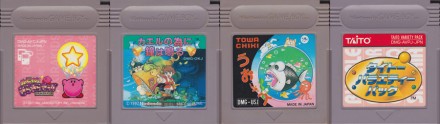
Reviews of Kirby’s Star Stacker, Kaeru no Tame ni Kane wa Naru, Fish Dude & Elevator Action.

My name is Ray Larabie and I'm talking to you from Nagoya, Japan. Welcome to episode 19 of Game Boy Crammer. I'll be reviewing a puzzle game called Kirby Star Stacker, and an RPG, a spiritual predecessor to Zelda Link's Awakening, called Kaeru no Tame ni Kane wa Naru, a nasty little game called Fish Dude, and Taito's Elevator Action.
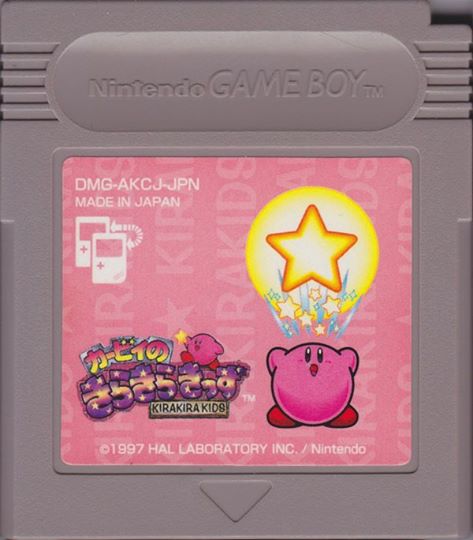
Thanks very much to StreakMachine.com for mentioning this show on a blog. Let's get on with the show. Kirby Star Stacker, also known in Japan as Kirby no Kira Kira Kids. It's a 1997 puzzle game developed by HAL Laboratories. Oh, do I love HAL Laboratories. They've made so many great Game Boy games. I think definitely my favorite Game Boy game is a HAL Laboratory game.
How did I not play this before? Kirby Star Stacker is a lot like other puzzle games where blocks are falling from the top of the screen. You can control them and turn them around. It's a lot like Dr. Mario, Tetris, and you're trying to just trying to clear the screen and earn stars by matching blocks.
So you've got pears and there's not that many different types. There's owls, fish, and hamsters, and stars. So as these things are falling down the screen, you can, you know, you put two matching ones together or several matching ones together and they'll clear. The other thing is, let's say you have a row and there's a fish on one end, a bunch of stars in the middle and a gap, and then a bunch of stars and another fish.
If you put a star in the middle there, it'll clear out the whole row. The stars are kind of a special little thing and it gives the game a lot more subtlety. Like there's a lot more strategy to it than just something like Dr. Mario where you're just kind of matching the colors. And they always come in pairs.
You either get the stars, the pair of stars, you get one animal on one side, another animal on the other side, or a star and an animal, or these special blocks that come down. And then once in a while you get this chain reaction which causes bonus blocks to fall. You'll complete one row of stars and then all these other stars will fall down and complete other rows.
So you get these kind of weird chain reactions where the whole game plays on its own for a few seconds. It's kind of cool. Who doesn't like that? And it's something you just don't get in other games. Well, I mean, in Tetris you never get a situation where you do a Tetris four line and then a whole bunch of other Tetris four lines happen because you did that.
You know, it's kind of fun. There's a whole bunch of different game modes. There's like a round clear where you're... that's the main type of game where there's like you can play different difficulties and a certain number of rounds for each one. Challenge mode where instead of clearing rounds it's just constantly falling blocks until you die.
So it just gets harder and harder and harder. One thing that's really cool in the round clear mode is that you get these cute little cartoon things that happen. Oh, you know, it's just nice to have a little break and a little two or three second intermission. Hey, why not? I mean, it's, you know, if in Tetris once in a while there's like a cute little animation, I wouldn't mind.
Oh, it's just really, really addictive. So if you have addiction problems with games, you better stay away from this one because... and it gets very hard, but it's not... it always seems to give you a break. You never feel like it's completely hopeless like it is in Tetris when you get that big block up the middle.
You always seem to be able to rescue yourself from pretty bad situations because of that chain reaction effect that can happen. And because there's so few different types of pieces that it's... there's usually a place you can match something if you really look. You don't get a situation where, like in some games, you're just waiting and you're not getting a matching piece.
The music is really cool. I had to record this with an emulator because I was getting hum off my Game Boy. The sound sounds much better than what you're hearing in the background. Really cool, addictive, fun music and crazy sound effects and weird little animations. This is one you have to have in your Game Boy collection.
You know, I would say it's essential. Kirby Star Stacker. I mean, unless you really hate block puzzle games, I would get this over Dr. Mario. I mean, Dr. Mario is kind of like... you're supposed to have Tetris in Dr. Mario as your basic block games. I would trade in my Dr. Mario for this. No problem.
It's just that much more fun, that much more deep in gameplay. And it's Kirby! Everybody loves Kirby! Maybe you hate Kirby and you shouldn't get this game. Otherwise, get it. For sure. Plus, it's HAL Laboratory. You can't go wrong. They've done the best Game Boy games. I don't know how I missed this one the first time around.
Maybe because 1997 was I still into Game Boy? Yeah, it probably was. Maybe I was too cheap to buy it. I probably couldn't find a used copy of it anywhere. But now I sure can. It's all over the place. So, you can probably get this one for fairly cheap. Mine was pretty cheap, so... Even if you get the Japanese version, you can get through it because the menus are pretty easy to figure out and very visual.
There's a tutorial, but you don't really need to figure it out as you go along. Pretty much self-explanatory. Kirby Star Sacker, go get it right now! 帰るのために金はなる was released in September 1992 in Japan only. The name translates to For the Frog the Bell Tolls. It's an action RPG in the style of Zelda. It was produced by Nintendo and Intelligent Systems.
The title's kind of a play on Ernest Hemingway's novel, For Whom the Bell Tolls. But I assure you, in this game, you won't be killing yourself blowing up a bridge. It's not the same storyline. The game looks familiar because it's the same game engine used for Zelda Link's Awakening. It's kind of a prequel in a way.
One of the main characters, Richard, actually shows up in Zelda Link's Awakening. If you've played the game, you might remember a prince that lives on an island. Around his home, there's a bunch of frogs hopping around, and actually the theme music around that area is the opening theme from this game.
So now you're gonna learn a little bit of backstory about this Richard fella. Richard's a prince, and then there's this other prince, played by you, from a rival kingdom, and they're having a duel. Richard wins, and then he has to take off and rescue a princess. And that's where the game starts. You move around the world in the familiar Zelda kind of way.
There's an overhead map. You go into shops and buildings and talk to people. There are dungeons. Not literally dungeons, but you know, the things that you go into in Zelda to do stuff. Except in this one, they're all side view. In Zelda Link's Awakening, sometimes you're in a side view mode. This one, every time you go into one of these dungeons, you're in a side view platform mode.
Now you play human in this game, however, the big gimmick with this game is you can turn into different animals. You can turn into a snake, you turn into a frog. As the title suggests, there's a lot of frog stuff going on in the storyline. It's a little bit like Lost Vikings, where you have to solve puzzles by changing into different animals.
Now this game is a lot more puzzle than action. When you get into a fight, let's say there's a creature and you walk up to it and you want to fight it, you just run into it and it'll just start fighting. There'll be a little cloud of cartoon smoke. You'll see the enemy's hearts and your hearts to represent a life bar.
The enemy's bar will drop, and your bar will drop a little bit too, as you lose strength. Whoever runs out first loses. That's it. So you just have to make sure you have enough strength when you fight an enemy. There's no rolling of the dice. You have to be strong enough to fight. There's no chance involved.
And when you have sufficient power to overpower an enemy, they just fly off the screen. Like you just walk into them and they go flying, so you don't even have to fight them. You can push things around in the environment. You can cut down trees. That's a big part of the game. But there's no real arcade action going on, not like Zelda, where you actually have to fight these battles.
The characters are super adorable. There's comedy all through the game. It's not really serious. A lot of funny, funny characters and silly missions that you're sent on. It's not a very, very long game. Link's Awakening was pretty epic. This thing, I would say, is about half. I found when I got to the end, that's probably where I'd be halfway through Link's Awakening.
But I didn't feel it was too short, because there's not that much depth to the game. It's just the right length. And there's a lot of surprises in this game. There are a lot of situations in this game where they take a typical RPG type of situation and kind of turn it around and really surprise you. And it's the kind of game where you don't want to read ahead.
I wouldn't read any kind of FAQ or anything like that, because the fun is all of the story surprises you're going to get along the way. However, I've got to warn you, there is one I found a really tough part where, it was not really tough, but I just wasn't expecting it. You can kind of get to a point where you can't move on without giving away too much.
I'm going to say you'll be fighting a creature's tail, you'll know when you get there. And if you can't beat it, it means you probably missed a heart container somewhere, or you probably missed getting a weapon or a shield or something. That's the only way you can get past that part. And lucky for you, there's a save game in this.
So you will have to replace the battery if you have an original one. You pick up a book, and you can save at any point. And it's not, you know in Zelda you couldn't really save in the dungeons, it would always send you back to the beginning. You can save anywhere in this thing, it's great. And you have three save slots, so it's no problem.
You probably want to, it's the kind of game where you want to keep a few backup ones, because sometimes you have to go back quite far, so you want to cycle through your save games. Now since this game was never officially translated into English, if you want to really enjoy this game, you probably want to play the English translation version of it.
Although I've read that you can get through it with the Japanese version, I mean I've played Zelda games in Japanese without really knowing what's going on. You kind of have to use an FAQ maybe, you could probably get through it. But if you really want to enjoy the humor, and you don't really read a lot of Japanese, you probably want to get the fan translation.
Which means you'll have to play it on an emulator, or you'll have to play it on a flash card. Listen to episode 17 if you want to learn all about flash cards. Now to do this translation thing, if you've never done it before, you have to patch the ROM. It sounds a lot harder than it really is. There's a program called Lunar IPS, Lunar IPS.
You get that, you need to get the ROM, wherever you get ROMs, so you get the original Japanese ROM. And then you get the fan translation. If you go to j.mp slash frog tolls, you can download the translation, and all you do is you use this Lunar IPS program, you tell it where the ROM is, you tell it where the patch is, and bam, it shoots out a patched ROM.
And then you load that into a flash card, you can load it into an emulator. Or you can even use Goomba Convert to convert it to a Game Boy Advance ROM, play it on that. If you just want to get a translated ROM that's already patched, well, yeah, you can get it, you're not supposed to. But listen, j.mp slash frog English will get you what you want.
But I didn't send you there, you got it? I think if you love Zelda and you've played all the Zelda games, this is an absolute must play. It almost feels like a Zelda side story in that, you know, the way that the music sounds like Zelda, the way the text comes on the screen, it's just, everything looks and feels like Zelda, it's like another Zelda game you've never played.
The cartridge itself tends to be in the, hmm, I've seen it around the 15 buck range. It's not rare, but it's also not very common. You don't see it lying, like you see the original Zelda Link's Awakening, the Japanese version, you see it all the time for about five bucks. I just wish they do an official translation of this, or it's one of these games that's, I think, an essential part of the Zelda universe, even though maybe it's not officially part of it.
I feel like we really missed out by not having this officially translated, it's like one of those things we need to demand from Nintendo, like they did with Earth Town. Search for DMG-OKJ, and if you have a Japanese 3DS, you can get it on Virtual Console. The following audio is taken from an in-store promo for Kairu no Tame no Kinemon.
It goes on for about three minutes, so I just gave you the beginning and the ending of it. In the video, there's this girl with kind of a frog hat and two crazy dancing frogs around her. It's pretty cute. If you look up on YouTube, for frogs the bell tolls, you're gonna find it. Here it is! It's an old version of Gagventure.
It's called... San-hai! Kairu no Tame no Kinemon! How was it? What? Where is Gagventure? I can't tell you that easily. It's a secret. But I'm sure you'll find it interesting. After this, I'm gonna play some games. I'm dead. I'm a translator, Pyrin Frog. I'll tell you the truth about frogs. I don't know.
The prince is a frog, and the frog is a snake. Henshin Gagventure Game Boy Software. Money is made for frogs. Gero Gero! Next to a big review! Fish Dude came out in Japan in 1990. It was by Toa Chiki. Here it's called Uozu. And the U-Asset came out in 1991, released by Sofell. In this game, you're a fish underwater, and you eat smaller fish.
So you're a medium-sized fish eating little fish swimming around. And then there's one big fish that tries to eat you all the time. It's not just an empty level. There's some coral and pipes and stuff like that. And you eat fish by pressing A. And if you want to spit out the fish, you can hit B and it'll spit it out.
And there's a timer and a fish counter. You have to eat a certain amount of fish to continue to the next level. How do you die? By getting eaten by the bigger fish. But that's not all. There's a bird. So if you try to jump, you can do a jump to get away from the big fish. But then a bird is probably gonna eat you.
In later levels, there's a fishing boat. And then there's a cat that tries to grab you off a fishing boat. There's jellyfish. And there's a scuba diver. But those things are not as bad as the big fish. Basically, this game is avoid the big deadly fish. So it's kind of like Pac-Man. There's basically no maze.
And there's one ghost that comes out super fast. Here's my problem with this game. Good games have some kind of ramp up when it comes to difficulty. You give the player kind of an easy level to kind of get into it. Gets a little harder, gets a little harder, and then it becomes impossible. Well, this game starts off in the impossible.
The first time I played it, I played it for about an hour before clearing the first stage. I would just play, die, die, die, game over, die, die, die, game over. And your game is over really quickly. Like I would say, in about a minute and a half, you could easily have a game over the first few times you play it.
That big fish is relentless. And as soon as it comes towards you, you're pretty much dead. So you end up having to kind of just hide behind stuff to avoid the fish. If it goes off the edge of the screen, it just pops on the other side of the screen. The worst thing is when you don't see it, because then it could just appear on either side of the screen.
And if you don't have anything between you and it, it's over. And you've got three lives, and they go really quickly. If you want to survive a little bit longer, you have to kind of hide around an object. Basically just running around an object, trying not to be seen by the thing on the other side. At the same time, you're trying to eat little fish.
Now when you eat a fish, you're vulnerable, and very vulnerable. It takes a while to munch those little suckers down. So most of the time you're just trying not to be eaten. Of course the time limit's running out, and it's just so hard right at the beginning of the game. I really didn't have a lot of fun with this.
I think if there were a few easier stages just to kind of get into it, and then just to be able to work your way up to it. But to have such a difficult stage right at the beginning is just not fun. If you like really hard, frustrating games, this might be okay for you. And something to make this game even more frustrating is the collision boxes on the obstacles are vague.
You have these sort of three-sided little coral things. It's hard to tell where the edge of the collision box is. So when you're running around it, sometimes you get stuck on nothing. And sometimes it seems like the big fish cuts right across the pixels. It makes it even more frustrating. If they'd made the obstacles just square, it would look ugly.
But at least it would be a little easier to play, a little more fair. But at least when you play this game, you get passwords. So if you beat a level, you get a password. Now in the US version, you get a two-letter password, which is unheard of. Isn't that nice? In the Japanese version, you get a four-letter password.
That's not too bad. But honestly, I don't know how you can get through some of these later levels. I tried some of the passwords just to get there. And there's no way, at least with my skill level, there's no way I could play this game. If you are a masochist, definitely go pick up this game. Look for DMG-USJ or DMG-US for the English version.
Taito! Elevator Action! This was originally an arcade game that came out in 1983. At the time it came out, it was really, really different. I mean, no one had really played a lot of platform shooters before. It's just something we'd never seen, so it was very popular. I remember lineups to play this game.
And it wasn't super, super hard. You can go for a few minutes, even if you're a beginner. You play a spy who has to infiltrate a building with a lot of elevators and escalators in it. And you have to collect secret documents, get to the bottom of the building, and then you have a getaway card you can take off and get to the next building.
And you have weapons, various weapons you can use to defend yourself and to defeat other spies. You can just run away from these enemies or you can shoot them for points. The main thing is getting all the secret documents before you get out of the building. And it's not much of a maze game. It gets a little confusing near the bottom of the building because you have to go up and go down.
It's a little bit of a maze, but not too bad. Now, the Game Boy version of this came out in 1991 in Japan, US, and Europe. It also came with the Taito variety pack. There was another version called Elevator Action EX that came out for Game Boy a few years later, which had color and you could pick between three different agents.
But I'm not going to get into that one. In this game, you play Secret Agent 17. You land on the roof via a grappling hook, and then you infiltrate the building. You can ride the elevators up and down. You can ride escalators up and down. You can ride on top of the elevator cars, and you can get squished by the elevator cars.
When you run into an elevator, you can use the D-pad up and down to move the elevator up and down. However, when you're on the roof, you can't control the elevator. Normally, when you're walking around, you can crouch when you push down. But in an elevator, you can't do that. You're controlling the elevator.
So you've got to watch out. You can't crouch. Sometimes you're going to get shot because you can't duck a bullet. You can also use A to jump and B to shoot. Now, it's a little different than the arcade game. You kind of get a kick while you're jumping. So basically, you just sort of jump into enemies and it'll kick them.
And you're going to need to duck a lot in this game. There's a lot of ducking to do. Not that much jumping. You can jump across an elevator shaft, an open elevator shaft. You don't have to worry about the elevator cable. You can just jump under the elevator or over the elevator. It doesn't matter. You can even squish enemies with the elevator if you just time it right.
This is a little different than the arcade game. In the arcade version, you had to look for these red doors. Behind those red doors would be secret documents. And you had to collect all the secret documents to get out of the building. However, in this version, it's an exclamation point on the door. Also, another difference with this version is there's question mark doors.
If you go into these doors, you get a random weapon. Now, you start off with a pistol, and the pistol's pretty good. It's the second best weapon in the game, I think. But if you go into these question mark doors, you get a random weapon. Is it random, though? If you're a scorer, you look at the last third digit from the end in your score.
Okay, how many hundreds you have at the end. If you have zero or 100 at the end of your score, you can get a shotgun. Shotgun's not so great. You can't shoot out the lights with it. It's slow to reload, and it has very limited range. It'll get you into trouble. The pistol is 400 or 500 at the end of your score, and that's what you start off with anyway, but sometimes you just want to get that so you don't have to deal with something horrible like the grenade.
The grenade is 600 or 700, and it's just horrible. You can't use it at close range. It's really slow. Sometimes you can get people on the next floor, but a lot of times what you think might work, a little tricky grenade trick, it just doesn't connect. Just make sure you don't have a 600 or 700 when you go into one of those doors.
The machine gun is the best weapon, and you have to have a 200 or 300 on your score. So if you walk by one of those doors, you've got a 200 or 300. Always walk in, because you're going to get that machine gun. Just hold the button down and spray bullets. If you have 800 or 900, you get a little bit of health.
Now, if you play the original elevator action, you're probably saying, What? Health? Yeah, well, this Game Boy version is a little easier because you have a health bar, so you can take quite a few hits. In fact, in general, this is a lot easier. If you've played the arcade version, it's pretty tough. It's not forgiving.
You can't get shot. In this one, you can take a few hits. And then if you are really careful about watching your score, you can get those hearts and bump up your health again and keep going quite a bit. Another fun thing you can do is you can shoot the lights out. You can't jump high enough to hit the lights, but if you get in the elevator and you time it right, or just kind of move up and down with the elevator to align yourself with the light, you shoot the light.
If you can get it to land on one of the enemy agents, it'll knock them out and kill them, and you get lots of points. But the other thing is it gives you a little bit of stealth. When you knock out the light, it knocks out all the building's lights for a few seconds, and it allows you a little more stealth.
They are not as accurate with their shots or something. It seems they shoot less. I don't know. But it gives you a little advantage. In the first couple of levels, it's not too hard, because the agents don't shoot that much. You know, usually you see them before they see you, and you can get a shot in, and a lot of times you can just crouch, because they very rarely shoot a low shot.
Once in a while, they do crouch and shoot, and you have to jump over, and sometimes you can't jump over. You've got to jump down the elevator shaft. Speaking of jumping down the elevator shaft, you can actually fall in this game. So what's the hurry? Well, in later levels, there's more of a time limit, so if you take too long, the enemies just speed up a little bit.
They fire a lot more. But it's not, honestly, it's not a big deal. You can kind of take your time in this game, and, you know, rack up some points if you want, and try to get those health power-ups. What if you get to the bottom without collecting all the documents? It's no big deal. You'll be automatically transported to one of the documents you left behind.
When you get all the documents, it's going to say OK at the top of the screen. It'll flash OK. That means you can head down to the bottom. A lovely woman will pick you up in her fancy sports car and drive to the next building. And you do it all over again. There are escalators, too, and if another guy's coming up an escalator and you're going down, don't worry about it, because you can't interact on the escalators.
You just watch each other go by. If you really care about points, you want to try to crush agents with the elevator or hit them with the falling lights. You get a lot of points for that. I really like the graphics in this game. It looks just as good as the original elevator action, I think. Everything's very clear. Nothing's really obscure.
The only thing is the width of the screen is kind of a problem sometimes. I really think the changes they made with the Game Boy version to reduce the difficulty make up for the lack of being able to see the full width of the screen. I highly recommend this game. If you can get the Taito variety pack, you're going to get Bubble Bobble, you're going to get Sagaya, and ugh, Chase HQ.
If you want the Japanese version, search for DMG-EAA. If you want the European version, DMG-EA-NOE. If you want the U.S. version, DMG-EA.