Game Boy Crammer · Episode 20
Pokemon Pinball, Uchuu no Kishi Tekkaman Blade, Batman, Money Idol Exchanger
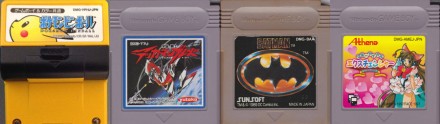
Reviews of Pokemon Pinball, Uchuu no Kishi Tekkaman Blade, Batman & Money Idol Exchanger.
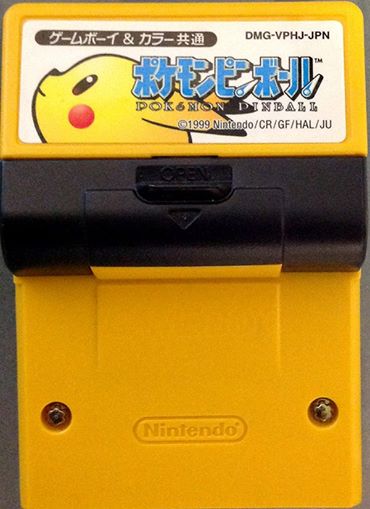
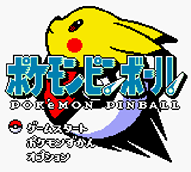
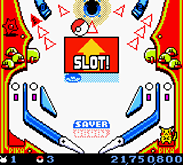
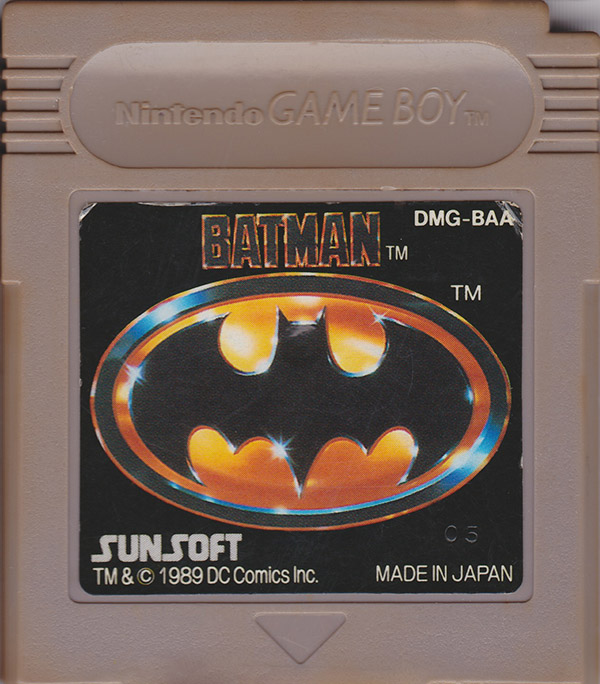
My name is Ray Larabie, and I'm talking to you from Nagoya, Japan. Welcome to episode 20 of Game Boy Crammer. Today I'll be reviewing Pokémon. Well, not really Pokémon: Pokémon Pinball. And a weird platformer called Uchu No Kishi Tekkaman Blade. Some sort of superhero game called The Batman, and a money-related money puzzle game called Money Idol Exchanger.
Listeners Simon Ewan Robertson let me know about this amazing company called Rose Colored Gaming. They make custom Game Boy systems, accessories, and they even do some Famicom and Super Famicom Repro games. They have faceplates for the Game Boy Micro that you could never get before. They've got one with a Mega Man on it and a Luigi.
All kinds of different designs. They've got soft cases for the Micro. They'll customize your system or you can get these pre-built portables that they've done. Now, they've done really great things with the Game Boy Advance. They have, not only have they added a backlight, but they've done kind of cool color tricks with them.
They have glass screens on them. And they've actually custom cast the plastic buttons so you have these colors that never existed before. Those all go for about $140, $150 around that range. Now, if you want a Game Boy Color with a backlit screen and, you know, colors you've never seen before, they do these gradient translucent shells and all kinds of cool stuff.
Those tend to be around the $80 to $100 range. They have Game Boy Advance backlight kits too, which you couldn't get for a long time. And you can get the glass lenses for your Game Boy Advance. While I really love the Game Boy Color, just the feel of it in my hands, there's nothing like the Game Boy Advance.
To me, that's the best Nintendo handheld of all time to hold in your hands. It's the perfect form factor for a handheld game. You have to see this stuff. Head over to rosecoloredgaming.com and check this stuff out. Let's get on with the show! Pokémon Pinball was released in April of 1999 in Japan, June 99 in the US, July 99 in Australia, and October of 2000 in Europe.
This was made by HAL Laboratories. This is the group that brought you the Kirby series, including Kirby Pinball, but also the finest Game Boy Pinball ever, Revenge of the Gator Pinball. This one's pretty good. I'd put it number three in the list of best Game Boy Pinball games. There was also a Game Boy Advance version that came out in 2003.
That's the one I was more familiar with. I had actually picked that up, and it's really my only experience with any Pokémon game. I know it may be strange listening to a review about a Pokémon game from a guy who's never played Pokémon, but I will eventually play Pokémon, and I will review it on this show someday.
This game has a save game battery in it, so you will have to open up and change the battery. It also has a battery for the Rumble Pak, which is a AAA battery, but that's not the same as the save game memory. You will have to open it up and change that. As it is a Rumble Pak game, you may want to solder in a tab battery.
I didn't, and so far I'm doing okay, but there's always a risk with these Rumble Pak games. When you tape the battery in, for some games it's okay, but you could shake it loose. In a game like this, you work so hard to collect these little Pokémon, that you will be really angry if you lose them all. Now, you wouldn't know it from looking at it, but this is actually the equivalent of a black cartridge.
This will play in the original Game Boy, or you can play it in Game Boy Color. And of course, in Game Boy Color, there's enhancements, but the gameplay is the same in both. Like, the frame rate is about the same, it feels about the same. If you play this on an emulator, you may be getting kind of an inferior, low frame rate version.
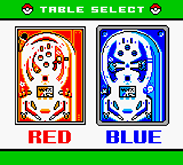
I've found I've always had trouble emulating this thing. It really only seems to run well in original hardware. It also works in the Super Game Boy, but you don't get the nice colors. You get two tables in this game, a red table and a blue table. Both are very similar, but are a little bit different layout.
Unlike the other two games I mentioned, you don't have a lot of exploring to do. You're basically doing everything on one screen. There's a couple of bonus stages for each one, but it's not the same as the, you know, Revenge of the Gator, where you're just, you know, going from screen to screen. You're pretty much staying on the same screen the whole time.
It's not really about points. There's kind of a flaw in the points system, which I'll get to later. It really is about collecting Pokémon. There is a score table you can save for each board, and you can put your initials in. But really, the big innovation that this game had was, it was the first pinball game that had persistent goal.
After you finish the game, you still get to keep something. Any other pinball game before that, when the game is over, you get a high score, and that's it. Oh, except for some, I don't know, there were some pinball games where you could lock the ball, and the next player would still get the lock ball.
That's not what I'm talking about. I'm talking about you can play this for a year, and keep on collecting new stuff. Every table has different locations that you can play. They don't make the table look any different. It's just, it says you're in this location, it shows you a little picture, and then you have a different selection of Pokémon that are available.
You start off, and it's sort of like a slot machine that's spinning around. I mean, you hit your button, it stops at a certain location. You do something to get into catch mode. It's called get mode in the Japanese version. This gives you two minutes where you can catch this Pokémon. Now you'll see a silhouette of it.
You don't know its name yet. You send the ball up to the jet bumpers. If you hit the jet bumpers enough, it's gonna free the Pokémon. Then you have to hit it with the ball directly four times. Now it's basically right in front of your bumpers. Not that hard to hit. And then you get to keep the Pokémon.
That part's pretty easy. For the first minute, you've got a ball saver on, so even if you lose the ball, it's still gonna keep going. Just that alone will let you capture a lot of different types of Pokémon. However, there are certain types of Pokémon where you need to evolve them to get to them. So this will be like a certain type, and then it'll be a variation of it.
I guess it's like the original game where you could evolve your characters. So in evolution mode, which I find a little bit harder to get to in both worlds, I'm really bad for hitting the left ramps in general in Pinball. I'm always kind of uncoordinated. I always have trouble getting to the evolution mode.
This gives you also a two-minute opportunity to evolve when you capture Pokémon. So it lets you choose which one you want to evolve. It'll show it on the list. Hopefully you've already captured some. Then you have to hit targets on the play field. There's six targets, but only three of them really matter, but you don't know which ones.
Once you hit those targets, it'll create a little EX on the board, a little EX symbol, which you have to hit with the ball. Sometimes it's quicker to let the ball drain, and then let the ball saver send out a new ball to get it. And if you're lucky and you still have time left, you'll get a little hole in the middle of the screen, just a little bit above your flippers.
Shoot the ball into that hole, and you will get to keep this evolved Pokémon. It'll be part of your permanent collection. The play mechanics on the table are very much like traditional Pinball. There are targets to hit, there are jet bumpers on the top, and you can also do lane changes. Uh, if you don't know what lane changes are, that's like in a Pinball game when you do the skill shot, and then it goes into the jet bumpers.
There are several lanes that you can light up, but if you hit the flippers, you can kind of move the lights around, so you can use a little bit of skill into lighting up those things at the top. And that'll give you a multiplier. The difference is, in the blue version, the lights alternate. So if the ball hits a lane and then hits it again, it reverts back to off.
You have to be really quick with it on that one, because where as the red one, it's pretty easy. Now, I mentioned the location before. There's an opportunity to change location that'll come up. So you're not stuck just getting that same set of Pokémon over and over again. There are bonus stages. In the blue table, there's something called Meowth Stage.
So this little cat thing is running back and forth on the screen. You have to hit him with the ball, and it just oozes money. I'm talking a lot of points. Try not to complete the level, just try to get very close to completing without completing, just to get a lot of points. It's gonna keep sending you back to that bonus level over and over again.
If you want a lot of points, you can just keep going back to that stage and just trying to collect as many points as you can. So many points that it makes the points you normally score on the board meaningless. So what if you get a multiplier for your ball? It's the amount of points you're gonna get is nothing compared to what you're gonna get on this stage.
And that's on the blue table. Another one on the blue table is the seal stage. There's little seals. You hit 20 of them, and that clears the bonus stage. On the red table, you've got Diglett Stage. They're like moles. You hit 20 of them, and then there's like a boss you have to hit three times. And there's also something called Gengar Stage on the red table.
You have to hit some sort of monsters that turn into ghosts or something. It's pretty fun. That's it? This game really is about catching them all. In the side range, you have these little Pikachu things that will save your ball on the sides. You have to charge it up. It's different for each board. Use your flippers to choose what side it's on.
It'll go pika, and the Rumble Pak will go crazy, and then it fires the ball back at you. There's also a slot machine, which gives you lots of bonus stuff. You get bonus multipliers, you get points, and you get a ball saver that lasts 30 seconds. And this will put two Pikachus, one on each side, that will protect the side range.
Also, with the slot machine, there's a chance to go straight into evolution mode or straight into catch mode. It's definitely worth learning which targets you need to hit to open up that slot machine mode. The control in this game is pretty good. The physics are pretty decent, although you wouldn't know it if you play it on an emulator.
Emulates very poorly, I don't know why. It feels like a Howl Pinball game. It doesn't feel like real pinball. I find I can't really do what I want with the flippers, but it's passable. The sounds are pretty good. The music could be better. It doesn't really stand out as annoying. It's a great one to play on the run, because you can just play for a few minutes and any time during the game, you can save.
So it's a perfect little commuting game. Because of the shape of the cartridge, it kind of sticks out in a weird way on the Game Boy Advance SP. I do recommend playing this on the Game Boy Color. There's no reason you shouldn't have this game in your collection. If you get the Japanese version, you will get different names for the characters than you might be used to if you're a Pokémon person.
Otherwise, the menus just start. Pokédex options. There's really no reading to do. Since it does have a save game, and it was a very, very common game, you can find these anywhere. There's no problem to get. I got one in the original factory seal package for six bucks. Look for DMG-VPHJ for the Japanese version, DMG-VPHE for the USA version, VPHU for the Australian version, and VPHP for the European version.
Uchū no Kishi Tekka Man Blade is a Japan-only release from the end of 1992. It was an anime series that ran from 92 to 95. Translation would be Space Knight Tekno Man Blade. It's a sci-fi series where Earth is under attack by something similar to the Metroids or the Alien series. And around the world, you've got kind of a Halo type of ring world.
None of that matters to the game, though, because this is a platformer. Now, this is not just a jump and shoot platformer. This is a jump and use grappling hooks type of platformer. If you've played the Super Nintendo version, it's not the same at all. The player pilots a robot neck type of thing, and you can use A for jump, B for punch, down is crouch, up plus B shoots out a grappling hook.
So you shoot a wire straight up, down and A does a high jump. Now, when you do these high jumps, you can't control left or right. You're just going straight up, straight down. Select pauses the game and start lets you choose special abilities. Now, these special abilities are gained by killing enemies and even projectiles.
And all you do is you hit start and then you choose what you want you want and you activate it and it works. After you've used an ability, you can only use abilities below that. So picture seven squares at the bottom of the screen. And if I want to use the fifth one, let's say, that means I can only use one to four until I kill more enemies.
So number one is SC Scout, which lets you move the arrows to look around the level. MA lets you deal with water. FL lets you move faster. FR will let you walk through lava or spikes. GR lets you float through the air. TH is thunder and will freeze the enemies on the screen. VT is a lightning bolt that causes damage to everything on the screen.
Now, the way you jump up to levels is not that intuitive. You have to use your grappling hook and you can't fire it at an angle. So it's a little bit of a platform puzzler in that way. A lot of times it's very frustrating because it looks like you can jump to something, but you actually need to use the grappling hook to get to it.
I never found I was scouting around the levels much with the Scout power up. I found the high jump would usually teach me all I needed to know about what was coming up. Now, this game lets you take damage. So this is not a one hit and die type of game, which is nice. Hell power ups are very rare and this game has limited continues.
For the most part, I found the levels not too hard. And if you really get stuck, you can wail away on some enemies or projectiles and then use your float power up or the lightning to kill some enemies. And you can kind of bypass some of the harder parts of the game. What I found really difficult and frustrating about this game is the bosses.
Now, there are only six levels in this game. If you're a game designer and you've got few levels in the game, what do you do? You make it really hard and some of these bosses are difficult. So I don't usually like to do spoilers, but I think some of these bosses were so frustrating. I played this game for quite a while before I got through it.
You know, you might want to skip this part if you don't want me to spoil how to kill these bosses. Stage one boss, use the lightning power up. Number two, it's not obvious what you have to do, but you have to get underneath and shoot upwards with your grappling hook. Stage three, you just go up to it and whack him to death with your stick.
The stage four boss is kind of a tree with these four little mouths coming off it. So what you want to do at first, stay safe distance away, whack at the projectiles until you can use the lightning, the VT. That's going to kill all the mouths. So now you still have the tree to deal with. It's firing projectiles at you a lot.
They're really hard to dodge and fight at the same time. So what you do is move a safe distance back. You have to whack a lot of projectiles until you're able to use your thunder. So find a nice spot where you can not run out of time and still hit enough projectiles to get your thunder power up. And run really quick towards it.
Use the thunder and start whacking at the trunk. Do that about three times and you're done. It's really tricky because you can't really tell you're doing any damage to the trunk. It took me a long time to figure out because I was hitting the trunk. I'm not sure if I'm doing any damage standing in the trunk taking damage.
You can't really tell how close you're supposed to get to it. But that is what you have to do to kill this boss. Now stage number five, I never like it when games do this. Just before the end of the level, for no reason, they swap your A and B controls in your left and right. You know, when they do that in games just to stretch the game out a little more.
So then you're completely messed up by the time you get to the boss. Left is right, right is left, A is B, B is A. You basically have to throw your spear at the boss and walk under him. You have to time it right, walk under him and throw it at his back and just keep walking under the boss. It's really hard to survive.
You can't make any mistakes because you just don't have that much life by the time you get to that point. And the stage six boss, well, you're on your own for that one. So is it worth getting this game? I don't know. I mean, I wouldn't pay a lot of money for it because it's such a short ride. And there's going to be a lot of frustration.
The character is pretty hard to control compared to a lot of other games and there's just not a lot of payoff. There's no really interesting, creative level design. The levels aren't that long. But if you like collecting obscure games, this is one to get. If you're looking for it, search for DMG-T7J.
Uchū no Kishi, Tekkaman Blade, Yutaka. Batman was released in Japan in 1990, in the U.S. in 1990, and Europe in 1990. But in the U.S. it was called Batman the Video Game. It was made by Sunsoft. And this came out, I mean, this is, the Game Boy is very new. It was only a few months old. The streets were alive with Batman fever.
Many people watched the movie The Batman, which stars a millionaire vigilante and had that wonderful Prince song. In case you couldn't tell, not only do I hate sports, I hate superheroes. Except for Mystery Man, that was a good movie. In this game you play a guy in a black suit who runs around killing everybody.
The creators of this game probably had just finished playing Super Mario Land and came up with an idea for a game that's exactly like Super Mario Land with a gun. You play Batman and the levels go from right to left. You can shoot and you can jump. If you hold your B button down, you can run. So some of the harder jumps you can actually kind of run and jump to.
There are enemies walking around and everything's very small. Small enemies, small Batman. The boss is a little taller, which is both good and bad. The good is that you can see very far. The bad is everything looks like a couple of pixels high. Now maybe to keep it more real, they gave Batman really terrible guns.
So yeah, Batman shouldn't be just going around shooting people in the back of the head with a gun, but the guns are lousy so I guess it's okay. It's certainly not contra. There are lots of power-ups hidden in floating bricks. So you can shoot these bricks and sometimes there are things in them. For example, there's a white square with a gun in it and you can shoot extra bullets so you can fire a little faster.
And then there's one in a black square. If you pick that up, it fires slower. If you see a circle with a B in it, that gives you a bunch of points. People used to care about that. It was still kind of the 80s. A heart is health. There's a shield, which looks like a Batman symbol. You grab this thing and little Batman Batarangs whip around you like a shield.
If you get the S in a square, you get a gun that doesn't shoot very far and doesn't shoot through walls. If you get the N in the square, you get a normal gun that you start off the game with. If you get a W in a square, you get a wave gun. If you get P, P in a square gives you a gun that shoots through walls.
And if you get the R in a square, you get something called the Bat Gun. And this shoots like a little Batarang and it goes through walls and doesn't stop an enemy. So if there's a couple of enemies, it'll go right through the whole bunch of them. And there's a T in a square, which I always missed, so I don't know what it does.
And there's a little firecracker that kills all the enemies on the screen, which I only saw a couple of times. The game's split up into four parts. In the beginning, you've got Gotham City and a couple of chemical factory levels. Then you're going to fight a boss. And if you haven't seen the movie, this is not going to spoil the story for you because it has very little to do with it.
After that, you're back at Gotham City. Then you're going to go to a museum for two levels. And then you've got a side shooter stage. So you're flying around in a Batwing ship and you are shooting. It's a side shooter. You know, you're shooting airplanes and helicopters and stuff like that. And you're going to have like a big kind of a gunship boss, a plane, and a chopper.
That part was actually pretty challenging to get through. It took me a few tries because it puts you way back to the beginning if you die. Then you're at the Gotham Cathedral for two more levels, except the second part is auto-scrolling. So you know they had a look at it. It's like all the elements of Super Mario Land are in this game.
And then you're going to fight the Joker, who looks exactly like the boss before, I think. I didn't see them side by side, but they seem to be the same thing. Two very underwhelming bosses that just shoot at you and take a million hits till you take down. If you run out of lives, you can continue your game.
And there's no limit to how many times you can continue. There's no save game, no passwords, anything like that. Now, one nice thing about this game, which wasn't common in games at the time, is you did have a health meter. So you could take a few hits and there were health power-ups. So you could keep powered up.
In fact, the biggest danger in this game is falling into a pit. The enemies aren't intelligent. They don't really fire with precision, so they're pretty easy to avoid. You have a nice little crouch move and you can crouch and move at the same time, which is kind of nice. So the music is quite good, actually.
As you go through the game, there's a variety of music and it's very moody and dramatic. Look, maybe you're crazy about Batman and you want to have every Batman game. I haven't played a lot of other ones, but this can't be the best one. It doesn't really give you any kind of Batman-like gameplay. It could have just as well been a generic guy jumping and shooting.
It's not terrible for a game from 1990, but I can see really no reason that anyone would want to get this. If you do want to get this in Japanese version cheaper, get it because it's all in English anyway. Japanese version is DMG-BAA. American version is DMG-BA-USA. European version, DMG-BA-NOE. Money Idol Exchanger was released in Japan only in August of 1997.
It was created by a video game developer called Face. In the same year, they created the Neo Geo version. So this was for arcades only. A company called Athena ported it over to Game Boy and PlayStation the same year. In fact, on the Japanese PlayStation Network, you can actually buy it now. It's really similar to a game called Magical Drop.
Blocks are falling from the top to the bottom of the screen. You're at the bottom. You can use a button to pick up blocks, and you can use another button to put blocks back down. Kind of shuffling blocks around at the bottom of the screen, hoping that the screen won't fill up and cross the line at the bottom.
It was so similar to Magical Drop that Data East, creator of Magical Drop, sued Face. And, uh, Face is gone. They went bankrupt shortly after that. Which is too bad because I like this more than Magical Drop. I mean, yeah, I guess the mechanics are kind of the same, but, I mean, how many... Look at nowadays on your, you know, iPhone and stuff like that.
How many games have exactly the same play mechanic? There's so many match three, match five kind of games. But I guess back then it was blatant enough that they, um, won the lawsuit. Instead of just colored blocks coming down the screen, you have coins. So these are based on the Japanese coin system, but it's not hard to figure out.
You have one, five, ten, fifty, a hundred, and five hundred. You have to combine these coins and they will go into a higher denomination. For example, if you take five ones together, five or more, it'll convert into a five. If you take two fives or more, it will convert into a ten. Five tens go into fifty, two fifties into a hundred, five hundreds into five hundred.
Now, if you put two or more five hundreds together, it disappears. And that's the goal, really, is to get everything up to five hundred and get rid of it. It may sound a little math-oriented, but it really isn't. Because, really, there's only two kinds of blocks. There are the ones that take two, the fives and the five hundreds and the fifties, and the other ones which take five, the ones, the tens, the hundreds.
That's really all there is to it. There's an E power-up. If you put two of these together, whatever coin is above it, that coin is going to disappear. So if you put it over a hundred, all the hundreds will disappear off the board. There's an R coin, which is similar, but instead it increases the denomination of the coin.
For example, if you put it on a ten, all the tens change to fifties, and you get kind of a cascade effect. You always want to put those on ones, tens, or one hundreds to get the best effect. Because, you know, if you get a whole stack of fifties together, they'll all disappear. Unlike Magical Drop, you don't just have to match vertically.
You can match in any direction at all. You can have an L-shaped block and add, let's say you have an L-shaped block of four ones. You can drop a fifth one on there anywhere, and it'll turn into a block. Now, the whole idle thing is, they just kind of set up a little storyline with this game. It doesn't actually affect the gameplay at all.
So when you start in the regular mode, CPU mode, you're playing against Mitsukoshi Sakura, also known as Xchanger. When you get to the next level, you're playing Takashima Asahi, Deatmiser. And basically, it's just increasing difficulty. There are eight opponents altogether, and they actually wrote in a storyline, like there's, for example, the first Mitsukoshi Sakura, the Xchanger.
She's a high school student and the daughter of the bank president. And the next girl, Takashima Asahi, Deatmiser, is Sakura's friend, but she's very shy, blah blah blah. I don't know why this kind of game needs a storyline, but it's there, and the pictures are really cute. Unlike some puzzle games, you're not hindered by the Game Boy's black and white screen.
It's really easy to see which coins are which. I never get confused. The Gohaku yen, or the 500 yen coin, is black. The five is gray, so you can really tell them apart easily. There's no problem there. Unlike a game like Puyo Puyo, where everything looks just gray. This is very playable in black and white.
Apart from the regular mode, there are two other modes. One of them is you have to try to reach a certain goal. It's increasing difficulty. And the third one is kind of a endurance round. The difficulty doesn't get higher. It just goes and goes and goes until your eyes bleed. I went for about almost an hour playing it, and I just turned it off.
It doesn't really get harder, but if you really have to kill a few hours, you can just keep stacking coins. This game is very, very addictive. I'm not that keen on puzzle games, but I can't put this one down. In fact, doing this review has taken me... I started yesterday afternoon, and I keep picking it up.
When I recorded the sound, I started playing it. After I finished recording the sound, I kept playing for like an hour and a half again. And then this morning, I was like, which button does what? I had better turn it on again, and then another half hour was gone. It's a really, really good game, and I love it a lot.
It's a lot better than Magical Drop. Magical Drop never really got me. This is more fun. Sometimes you'll just see a batch of coins, and you'll just toss a coin in there, and there's no time to count them all, and you just guess maybe that's enough. And if you're lucky, it's five, and they all disappear.
There's a lot of great situations like that. The border at the bottom is very forgiving. You can kind of let it go over a bit. If you've played Quarth, in Quarth, the line at the bottom, where the blocks are not supposed to pass, is very cruel. In fact, you can be waiting for blocks to clear, and they'll pop off the bottom, even though you've cleared them, and it'll still punish you with death.
In this one, not so much. It's very forgiving. And it's a shame a lot of people didn't get to experience this. I don't remember seeing this in the arcades. Apparently, they changed the look of the coins or something to make it look less like Japanese currency. But I don't think you really have to be familiar with Japanese currency to play this thing.
And like Sudoku, it sounds like there's a lot of math involved, but not really. It's just matching twos and fives. This game is in Japanese, but there's not a lot of reading you have to do. I mean, the menu's easy to figure out. There's no save game, so you don't have to worry about replacing the battery either.
I give this game my full recommendation. You're not going to be disappointed with it. It is one of the best puzzle games on the Game Boy. It's a little hard to find. I've never seen it on a shelf anywhere. It's not super valuable, but you just don't see them around very much. I ordered this one on Yahoo Auctions.
Get this one. It's called Money Idol Exchanger, and you can get it by searching for DMG-AMEJ. Sometimes it's listed with a -JPN at the end.